Last updated 2026-08-19
TL;DR
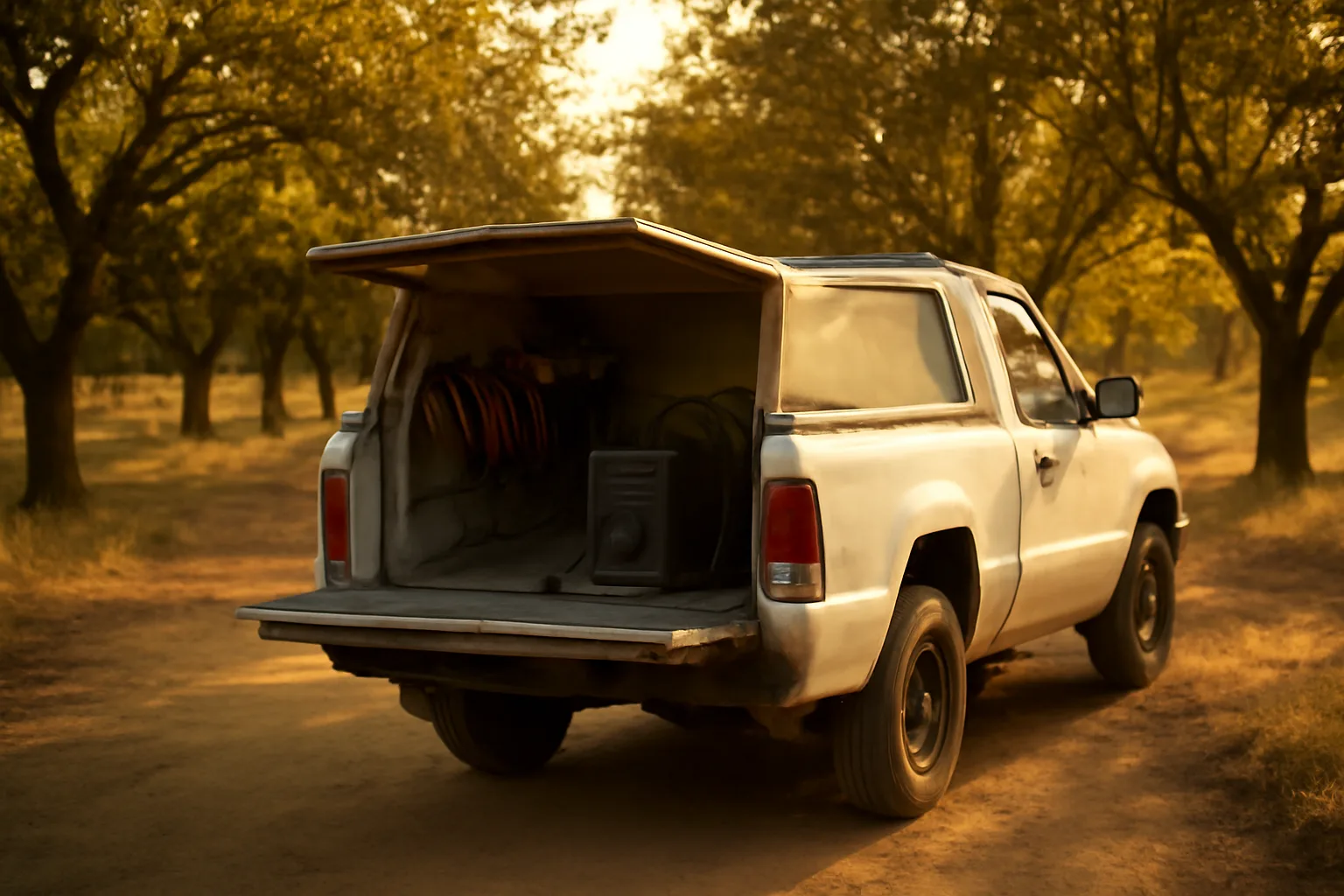
A mobile welder in California spends most first-year cash on a truck, a power source, insurance, and paper. Jobs of $500 or more on buildings pull you into CSLB and a $25,000 bond. Field repair on equipment can sit outside that license. Confirm current board fees with CSLB. Nobody publishes a clean statewide startup total.
How much does a mobile welder cost in California?
There is no single honest total. A mobile welder in California buys a truck, a welding power source, gas and wire, insurance, and a paper stack that changes the second the work touches a building. The only statewide dollar figures you can pin to a statute are the $500 unlicensed project cap and the $25,000 contractor bond face amount.[1][3]
People who quote one startup number are guessing. Used trucks move with the market. Insurance moves with your record and where you park the rig. Board fees change. Confirm those with the issuer, not with a blog.
Already own a three-quarter-ton gas truck and a working multiprocess machine? Then your cash outlay is mostly paper, bottles, and insurance. Buying the whole rig in coastal California is a different story, because the truck eats the budget. I would price a registerable truck first. Then the machine. Then insurance. Then licenses.
Equipment repair on personal property is not the same legal box as welding a stair stringer on a house. A cracked loader bucket, a trailer frame, or a loose ranch repair can sit outside the Contractors State License Board. A handrail on a dwelling can pull you in.[2]
That split drives cost more than any national “mobile welder kit” list ever will. Compare other states only after you price California truck rules. A mobile welder cost in arizona article will not capture CARB or CSLB.
Do you need a license for mobile welder in California?
You need a CSLB contractor license if you take construction work of $500 or more, counting labor, materials, and everything else on one project. That line lives in Business and Professions Code section 7048.[1] Welding on buildings, stairs, gates sold as site improvements, and similar fixed work is contracting under section 7026.[2]
You may skip CSLB if you only repair personal property. Think truck frames, farm implements, attachments, and shop fabrication that never becomes part of a structure. You still need a local business license in most cities, a seller’s permit if you sell parts, and insurance a customer will actually accept.
The exemption is narrower than Facebook comments claim. Section 7048 also says the exemption “does not apply to a person who advertises or puts out any sign or card or other device that might indicate to the public that he or she is a contractor or that he or she is qualified to engage in the business of a contractor.”[1] A door magnet that reads like a building contractor can burn the $500 path.
Unlicensed contracting is a misdemeanor under section 7028. Do not treat a citation as a marketing expense.[5]
AWS cards, mill tests, and a nice coupon book are not a California contractor license. They matter to buyers. They do not replace CSLB when the job is a structure.
How long does mobile welder take in California?
The long clock is experience, not the form. To qualify for an original CSLB trade license you need four years of journeyman-level experience in the classification, under Business and Professions Code section 7068 as the board applies it.[4] If you already have that time, the rest is application, exams, bond, workers’ compensation filing, and local tax registration.
I will not quote a current CSLB processing week count. Those queues move. Confirm status with the board. No article can promise an approval date.
If you lack the four years, buying a truck does not shorten the statute. You can work as an employee, partner with a qualifying individual, keep work on true personal-property repair, or stay under the $500 cap without advertising as a contractor. Those are slower paths. They are legal ones.
City business licenses can print in days. A seller’s permit from the California Department of Tax and Fee Administration can be same-day online for a simple account.[10] Insurance binding depends on the market. A used truck that fails California diesel rules can stall you for months while you shop again.[14]
Plan the experience and the truck first. Treat exam dates as a later, shorter step.
What CSLB classification covers mobile welding work?
Field welding on structures usually sits in C-60 Welding. CSLB describes that class as the contractor who joins and fabricates metals with gas and electric processes.[7] Structural steel erection is a different class (C-51). A general building license is not a shortcut if you cannot qualify for it.
Pick the class that matches the work you will bid, not the class that sounds broad on a forum. The board tests the trade. Your listed experience has to match.
Mobile welder California operators who only chase equipment repair often never pull C-60. That is fine if they stay off structures. The minute you bid a $2,400 balcony rail, you are in C-60 territory if you are not otherwise licensed.
I would not collect extra classifications on day one. Each class is more exam prep and more experience letters. That is money wasted until a real bid needs it.
Read the current C-60 writeup on CSLB before you file. Classification text is short. File against the words, not against a nickname.
What does the $500 job limit actually mean?
It is a project cap, not a daily cap. Business and Professions Code section 7048 says the chapter does not apply to “any work or operation on one undertaking or project by one or more contracts, the aggregate contract price which for labor, materials, and all other items, is less than five hundred dollars ($500).”[1] Split invoices on the same stair do not reset the clock.
Materials count. If rod, gas, and a cutoff wheel push a $380 labor ticket over $500, you crossed the line. So does a second trip that is really the same undertaking.
The exemption also fails if you hold yourself out as a contractor. Truck lettering, yard signs, and “licensed and insured” ads are how people talk themselves out of 7048.[1]
Living on sub-$500 tickets is possible in a dense city if you like small repairs and you keep the advertising honest. It is a poor plan if you want farm season, GC callbacks, or anything with a building inspector.
Use the cap as a bridge while you qualify, not as a business model. One angry owner with photos of your setup is enough paperwork to erase a year of tiny cash jobs.
How much is the contractor bond and the rest of the state paper?
If you license, the bond face amount is $25,000. Section 7071.6 says the board shall require “a contractor’s bond executed by an admitted surety insurer in the sum of twenty-five thousand dollars ($25,000)” before issuance and to keep the license.[3] That $25,000 is not cash you mail to Sacramento. It is the surety’s limit. You pay a premium the surety sets off your credit. Confirm the premium with an admitted surety. I will not invent one.
CSLB also collects application and license fees. Those amounts sit on the board’s current fee schedule and they change. Confirm them on the form you actually file. Do not photocopy a 2022 blog.
Workers’ compensation is part of the license file. Section 7125 requires a certificate of insurance or an exemption if you have no employees.[6] CSLB explains the exemption and the insurance filing on its workers’ compensation page. File what is true. A fake exemption is how people lose licenses.[9]
A federal EIN is free from IRS if you need one for a bank or a policy.[11] That is the cheap part.
Skip the “license consultant” for boxes you can read yourself, unless your experience record is a mess. Pay a surety and an insurance broker. Skip the guru.
What does the truck and welding gear actually cost?
The truck is the budget. California used prices run hot, and diesel that can still be registered is its own market.[14] I cannot give you an honest single sticker. Pull current listings for the GVWR you want, then call DMV and CARB before you wire a deposit.
A gas three-quarter-ton with a simple service body is what I would shop first for a one-person rig. It keeps you under most commercial-driver triggers and away from the nastiest diesel rules. A heavy diesel chassis looks serious on Instagram. It can also be a title you cannot transfer.
The power source is the second check. New multiprocess machines from the big makers span a wide list-price band by amperage and duty cycle. Used iron is fine if you can test it on a known coupon. I would not buy a no-name inverter to save a few hundred dollars. I would buy spare leads, a decent helmet, and clamps before I bought a fancy feeder you will not use.
Gases, wire, abrasives, and coupons are the quiet monthly bill. Nobody has a clean statewide study of mobile-welder consumable spend. Track your first 30 jobs and you will know more than any article.
Want a cheaper truck market for comparison? mobile welder cost in idaho and mobile welder cost in colorado show how fast the iron line drops once you leave California registration rules.
What insurance do California mobile welders carry?
Customers ask for general liability, hired and non-owned or commercial auto, and a certificate that names them. Inland marine (the floater on the machine) is what pays when someone steals the welder out of the bed. I have not seen a public, California-only average premium for this exact mix. Brokers price driving record, garage ZIP, radius, and whether you weld in occupied buildings.
Do not run personal auto on a rig you advertise. A denied claim on a job site will cost more than a year of commercial auto.
If you have employees, workers’ compensation is not optional, and CSLB will want the filing.[6][9] Sole owners often file an exemption. That exemption does not cover a helper you “just pay cash.”
Hot-work endorsements and additional-insured wording are where first-year operators stall. Plants and GCs will reject a sloppy certificate. MobileRigPath publishes a $149 one-time Truck-Build + COI Kit at /start for people who want checklists on that paper. It is optional. A broker who already writes welding accounts can do the same work.
Spend money on a broker who has placed mobile trades in your county. Do not buy a cheap online GL policy that excludes “pyrotechnic operations” or “work over two stories” in six-point type.
Do California air and truck rules change the budget?
Yes, if the truck is diesel and heavy. CARB’s Truck and Bus rules hit in-use diesel vehicles over 14,000 pounds GVWR. Later fleet rules can limit what you may add.[14] A bargain out-of-state diesel can be a paperweight at the DMV window.
Confirm the engine family, GVWR on the door sticker, and current CARB status before you buy. I would not take the seller’s word. I would not take mine either. The board that registers the truck is the one that matters.
Most pickup-based welding rigs stay under the federal CDL threshold of 26,001 pounds GVWR. California commercial license rules still care about what you tow and how the chassis is plated. Read the DMV commercial handbook for your exact setup.[15] A Class C driver in a one-ton is common. A loaded F-550 plus trailer is where people get surprised.
Compressed gases have their own tie-down and quantity rules. OSHA’s welding standard and Cal/OSHA construction welding orders still apply in the field, including cylinders, screens, and fire watch habits.[12][13]
A clean gas truck is boring. In California it is often the cheaper legal choice.
What do customers pay a mobile welder in California?
Trip charges plus an hourly rate, or a hard bid on a defined weld. Coastal and bay jobs pay more than the valley. Emergency callouts pay more than scheduled farm work. Nobody runs a public statewide rate card for mobile welding, and BLS wage data covers employed welders, not owner-operator invoices, so treat paycheck tables as a floor, not your bid.
Post a trip fee that covers fuel and the first half hour. California traffic makes “free to show up” a gift.
GCs will want a license, a bond, and insurance before they pay like a contractor. Equipment yards will want proof you will not burn the shed down. Cash ranch work still exists. It does not build a file you can take to a bank.
Pricing against other regions? mobile welder cost in florida and mobile welder cost in illinois are useful only for gear, not for California overhead.
Raise the trip fee before you cheapen the hour. Drive time is the part you cannot weld faster.
What first-year operating costs get people?
Fuel, parking, and downtime. A rig that lives on a street in Los Angeles has a different burn rate than a rig on a paid yard in Kern County. City business tax in Los Angeles is its own filing. Smaller towns often sell a flat business license. Confirm with the city clerk where you are based.
Consumables sneak. So do extra insured certificates, medical card renewals if you wander into commercial plates, and the Saturday you lose to a failed smog or a dead battery.
Unpaid invoices are a cost. Net-30 GC work will starve a new mobile welder who bid like a cash shop. I would keep a cash buffer equal to a month of fuel and insurance. I would not finance consumables on a credit card “until the big job hits.”
Safety shortcuts are a cost. Cal/OSHA welding rules and OSHA 1910.252 are not decoration.[12][13] One shop fire or one cylinder event wipes the year.
The brand-new service body with LED drawers is a cost I would defer. A used body that locks is enough.
Do you need a seller's permit, city tax, or home-base permit?
If you sell materials, even as a line on a repair ticket, CDTFA expects a seller’s permit. Publication 73 is the plain-language guide.[10] Labor-only work can still create a filing if you regularly transfer goods. When in doubt, read Pub 73 and ask CDTFA. Guessing is how people get back-tax bills.
Cities and some counties tax the privilege of doing business. Los Angeles uses a business tax account. Other cities sell an annual license. Home-occupation rules can limit how many trucks you park on a residential street and whether customers may visit.
A fictitious business name filing lives at the county if you trade under anything but your personal legal name. An LLC is optional. It does not replace the contractor license, the bond, or the insurance.
Get the city license and the seller’s permit before you print shirts. Do not form three entities to look bigger.
Alaska and Hawaii have their own tax shapes if you ever compare isolation markets. See mobile welder cost in alaska and mobile welder cost in hawaii only as contrast, not as California advice.
What would I buy first and what would I skip?
I would buy a registerable gas truck, a known multiprocess machine, commercial auto and liability that a yard will accept, and the local tax accounts. I would log four years of real experience toward C-60 if I want building work. I would skip chrome vises, extra classifications, and any course that promises a license without the hours.
I would not paint “Licensed Contractor” on the doors until CSLB has issued the number. Section 7048 cares about how you advertise.[1]
If your whole plan is trailer frames and attachments, stay in that lane and do not bid a stair. If your plan is site work, budget the $25,000 bond and the experience file as real parts of the job, not afterthoughts.[3][4]
For a cheaper mainland paper path, mobile welder cost in alabama is a different legal world. Do not import it.
MobileRigPath is an independent publisher, not a law firm and not a service company. Confirm fees, forms, and timelines with CSLB, CDTFA, CARB, DMV, and your city. The optional kit lives at /start if you want truck and COI checklists after you have read the statutes yourself.
Frequently asked questions
Do you need a license for mobile welder in California?
You need a CSLB license for construction work of $500 or more on a structure, counting labor and materials. Pure repair of personal property such as equipment or trailers can sit outside CSLB, but city tax accounts and insurance still apply. Advertising as a contractor can kill the $500 exemption. Confirm the facts on your job mix with CSLB.
How much does mobile welder cost in California?
The truck, machine, and insurance are the large, variable checks. Statute pins two numbers: a $500 unlicensed project cap and a $25,000 contractor bond face amount if you license. Board fees and premiums change. Confirm those with CSLB and your surety. Nobody publishes a single statewide startup total that you should trust.
How long does mobile welder take in California?
Four years of journeyman-level experience is the real wait if you need an original CSLB trade license. After that, application, exams, bond, and local accounts are shorter but not on a promised calendar. Confirm current processing with CSLB. A truck you cannot register under CARB can delay you longer than the exam.
Can I weld farm equipment without a CSLB license?
Often yes, if the work is repair of personal property and you are not improving a building or other fixed work. Stay off structures, do not advertise as a contractor, and still get the city license and insurance a ranch or dealer will accept. A welded handrail on a barn apartment is a different job than a bucket repair.
Is AWS certification the same as a California contractor license?
No. An AWS performance qualification tells a buyer you can make a weld to a procedure. CSLB tells the state you may contract for construction work in a class. Many jobs want both. Neither card replaces the other. City deputy welder programs, where they exist, are a third pile of paper.
Do I need a seller's permit if I only charge labor?
If you only bill labor and never transfer parts, you may not need one. The moment rod, plate, or hardware hits the invoice, CDTFA Publication 73 is the document to read. Many mobile welders sell consumables without noticing. Confirm with CDTFA rather than copying another truck’s invoice style.
Does a mobile welder need a CDL in California?
Most pickup-based rigs under 26,001 pounds GVWR do not need a commercial driver license. Door-sticker GVWR, combined towing weight, and how the vehicle is plated decide it. Read the current DMV commercial handbook for your chassis. A heavy service truck plus trailer is where people accidentally cross the line.
Can I operate under $500 jobs forever?
You can try, if each undertaking stays under $500 for labor and materials and you do not advertise as a contractor. Splitting one project into small invoices is how people get charged with evasion. It is a weak long-term model if you want larger repair or any inspected site work.
Do I need workers' compensation if I have no employees?
A sole owner with no employees often files a CSLB exemption under the workers’ compensation rules in section 7125. The exemption is not a free pass to pay a helper in cash. If anyone works for you, get a policy and file the certificate. Confirm the current exemption form with CSLB.
What happens if I take a $2,000 handrail job without a license?
That is unlicensed contracting if the rail is part of a structure. Section 7028 makes it a misdemeanor, and you can face a stop-work mess plus trouble collecting. The $500 cap will not save a $2,000 site job. Get licensed or stay off the building.
How much is a CSLB application right now?
I will not quote a fee that the board can change. CSLB prints current application and license fees on the form and fee schedule you file. Add the surety premium for the $25,000 bond, which is not the same as the face amount. Call the board or read the live form before you write a check.
Do I need a license to weld on trucks and trailers?
Usually not a CSLB license, because vehicles are personal property, not buildings. You still need local business registration, insurance the shop or owner accepts, and any hazmat or shop rules that apply to the site. If the “trailer” is actually a park-model or a structure on blocks, stop and re-read section 7026.
Are out-of-state contractor licenses recognized in California?
Not as a free swap for C-60. CSLB has its own experience, exam, bond, and filing rules. Some waiver paths exist for certain applicants. Confirm any waiver on the current CSLB application instructions. Do not bid California structures on an Arizona or Nevada card.
What C-60 exam should I study for?
An original C-60 path is the Law and Business exam plus the welding trade exam. CSLB publishes study guides and the current exam plan. Use those, not a random question dump. Your experience affidavits have to match welding work, not a vague “I helped on jobs” letter.
Sources
- California Business and Professions Code § 7048: Unlicensed work is limited to under $500 for labor, materials, and all other items on one project, and the exemption does not apply if the person advertises as a contractor.
- California Business and Professions Code § 7026: A contractor includes a person who undertakes to construct, alter, repair, or improve a building, structure, project, or other improvement.
- California Business and Professions Code § 7071.6: CSLB requires a contractor’s bond executed by an admitted surety in the sum of $25,000 as a condition of license issuance and maintenance.
- California Business and Professions Code § 7068: An original license applicant must show the knowledge and experience in the classification that the board requires for public protection.
- California Business and Professions Code § 7028: Acting in the capacity of a contractor without a license is a misdemeanor.
- California Business and Professions Code § 7125: A license applicant or licensee must file a workers’ compensation insurance certificate or a valid exemption.
- CSLB C-60 Welding classification page: C-60 is the CSLB trade classification for welding contractors who join and fabricate metals with gas and electric processes.
- CSLB Workers’ Compensation page: CSLB requires a current workers’ compensation filing or exemption to issue and maintain a contractor license.
- CDTFA Publication 73, Your California Seller’s Permit: Businesses that sell or lease merchandise, vehicles, or other tangible personal property in California generally must hold a seller’s permit.
- IRS Apply for an Employer Identification Number (EIN) Online: Eligible applicants can obtain an EIN online from IRS at no charge.
- OSHA 29 CFR 1910.252 Welding, Cutting, and Brazing: Federal general-industry welding rules cover fire prevention, cylinders, and protection of personnel during welding and cutting.
- Cal/OSHA Title 8 § 1536 Ventilation and personal protective equipment for welding: California construction safety orders set ventilation and PPE requirements for welding, cutting, and heating.
- CARB Truck and Bus Regulation program: California in-use diesel rules apply to on-road diesel vehicles above 14,000 pounds GVWR and affect whether a used truck can be operated.
- California DMV Commercial Driver Licenses: A commercial driver license is required for vehicles at or above the federal CDL weight and configuration thresholds, including 26,001 pounds GVWR class combinations.